

How Super All-Wheel Control Builds Everyday Confidence for 2026 Mitsubishi Outlander Drivers around Philadelphia, PA
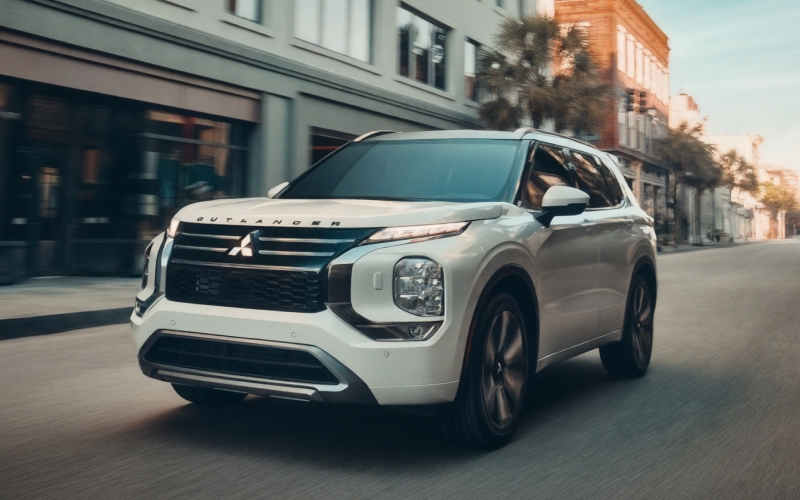
Atlantic City Mitsubishi - How Super All-Wheel Control Builds Everyday Confidence for 2026 Mitsubishi Outlander Drivers around Philadelphia, PA
If you’re weighing traction tech for city-to-suburb life, Super All-Wheel Control (S-AWC) on the 2026 Outlander is the kind of hardware-software partnership that quietly elevates every mile. It’s not just “all four wheels turn” — it’s a smart, predictive system that distributes torque and modulates braking to help the SUV feel settled and neutral as roads change under your tires. In Center City and Old City, that might mean confident cornering on tight blocks with patchwork pavement. Farther out, it’s reassuring stability when merging onto I-76 or rolling across the Walt Whitman Bridge on gusty days. On weekends, as you point toward South Jersey trails or sandy parking areas near the shore, the Mud or Gravel modes can make the difference between choppy progress and calm, confident traction.
What sets S-AWC apart is how it blends with the Outlander’s core dynamics. The MacPherson strut front and multi-link rear suspension give the SUV a natural, composed feel; S-AWC enhances that with subtle torque shifts that trim understeer and keep steering inputs intuitive. On-ramp confidence improves in Tarmac mode, while Snow mode softens throttle mapping and adjusts distribution to help the vehicle track predictably on low-grip surfaces. It’s not about making you a rally driver — it’s about helping a seven-passenger family SUV remain collected as conditions go from dry, to wet, to uneven, all in the same afternoon.
The 1.5L MIVEC turbo engine’s 48V mild-hybrid assist also contributes. By smoothing engine restarts and bolstering low-speed torque, it helps the Outlander feel more composed when you’re creeping through South Street traffic or parking near the stadium district. Add the available Multi-View Camera System for tight city garages and parallel spaces, and you have an SUV that’s tech-forward without asking you to learn a new language. The icing on the cake is cabin tech that stays out of your way yet stands ready: a standard 12.3-inch Smartphone-link Display Audio with Navigation, Wireless Apple CarPlay® and Wireless Android Auto™, and Mitsubishi Connect with Safeguard and Remote Services for added peace of mind in unfamiliar neighborhoods.
On the highway, available MI-PILOT Assist™ takes the edge off the daily grind. Think Navi-link Adaptive Cruise Control with Stop & Go that understands speed changes, paired with Lane Keep Assist and Lane Departure Prevention for steadier tracking on longer stretches. It won’t drive for you, but it will reduce the mental load on repetitive commutes between offices or evening returns after a game. Pair that with the available Dynamic Sound Yamaha® Ultimate system — known for its 12 speakers, dual amplifiers, and clever noise management — and the drive home can feel more like a focused reset than a chore.
When it’s time to leave city streets, S-AWC’s Gravel and Mud modes become your best allies. Visiting friends in the suburbs with a long, unpaved driveway? Gravel mode refines traction to ease you to the front door without fuss. Heading to a trailhead with ruts and a soft shoulder? Mud mode prioritizes momentum with sensitive torque allocation and wheel control to help you keep rolling. The point is confidence — you choose the destination; the system helps your SUV feel ready for it.
If you’re new to selectable drive modes, here’s a quick primer to make the most of S-AWC on day one:
- Start with Normal: Use it for most trips; it balances efficiency, response, and sure-footedness.
- Tap Eco for smoother throttle: Helpful for crowded downtown streets and errands with lots of stop-and-go.
- Choose Tarmac on spirited on-ramps: It sharpens responses for more confident merges and lane changes.
- Switch to Gravel for unpaved roads: Improves control on loose surfaces, like construction detours or dirt lots.
- Use Snow on slick days: Calmer throttle and more conservative power split help maintain steadier tracking.
- Pick Mud for soft, rutted surfaces: Aids momentum when the surface wants to bog you down.
A few pro tips make everyday life even easier. First, consider tire selection. Keeping tires properly inflated and seasonally appropriate amplifies S-AWC’s benefits. Second, use the available power liftgate with adjustable height in garages with low clearance — you’ll appreciate it the third time you avoid a scrape. Third, if you carry passengers often, store a few rear-seat essentials under the cargo floor so you can shift quickly from seven seats to a wide cargo bay without digging around. The Outlander’s third row folds flat to create a useful load floor; it’s a simple transformation once you’ve practiced it once or twice.
For families, the standard safety suite brings meaningful coverage — from Forward Collision Mitigation with Pedestrian Detection to Rear Automatic Emergency Braking and Blind Spot Warning with Lane Change Assist. Pair that safety backbone with available MI-PILOT Assist™ and the Multi-View Camera System, and you have a driver aid stack that supports rather than distracts. The result is a daily drive that feels less taxing, even as routes change from the Schuylkill to the Blue Route and back again.
If you’re evaluating where to buy and how to configure, Atlantic City Mitsubishi — serving Philadelphia, Trenton, and Egg Harbor Township — can walk you through S-AWC in real time, demo MI-PILOT Assist™ on a tailored test route, and help you choose the trim or package that matches your tech goals.
Frequently Asked Questions:
How is S-AWC different from regular AWD?
S-AWC integrates torque vectoring and brake-based control with selectable drive modes, aiming to keep the SUV more neutral and confident as surfaces change, rather than simply sending power to the rear when slip occurs.
Do I need to switch modes every time the weather changes?
No. Normal mode works well most days. When you encounter specific conditions — slick roads, gravel, or mud — a quick mode change optimizes traction and response.
Does S-AWC help with towing?
While the system primarily focuses on traction and stability, that composure can be helpful when launching a small trailer on a loose surface. The Outlander is rated up to 2,000 pounds when properly equipped.
Will S-AWC make my steering feel heavy?
Steering remains light and precise. You’ll mostly notice steadier tracking through curves and improved confidence on uneven or low-grip roads.
Does S-AWC affect cabin comfort?
Only positively. The system’s subtle interventions help reduce abrupt wheelspin or lurching, so passengers experience fewer jolts when roads get messy.
Request more 2026 Mitsubishi Outlander information
Categories:
Mitsubishi Outlander