

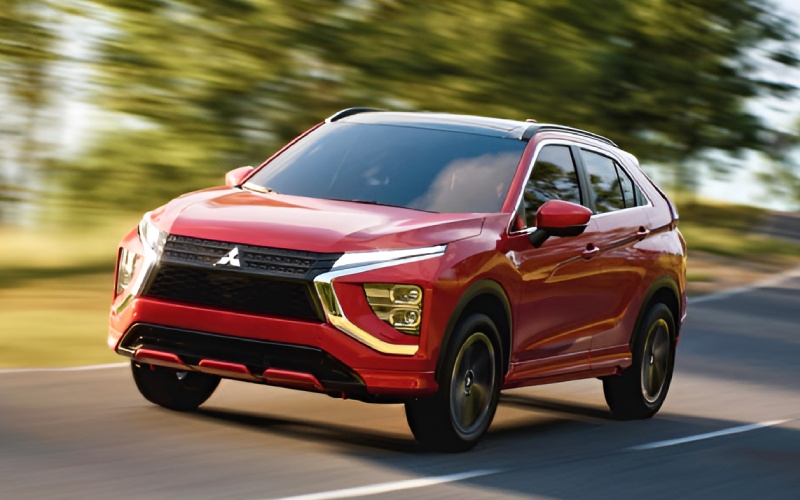
Atlantic City Mitsubishi - Which AWD system gives more year-round confidence around Philadelphia, PA — S-AWC on the 2026 Eclipse Cross or i-Activ AWD on the 2026 CX-30?
When shoppers compare compact SUVs for four-season driving, the question often becomes less about horsepower and more about traction intelligence. Mitsubishi’s Super-All Wheel Control (S-AWC) in the 2026 Eclipse Cross and Mazda’s i-Activ AWD in the 2026 CX-30 both aim to keep you planted, but the way each system does the job—and how much control it gives you—matters when roads are wet, rutted, or slick with lake-effect snow around Philadelphia, PA.
S-AWC integrates an electronically controlled all-wheel-drive system with Active Yaw Control and selectable drive modes—Auto, Snow, and Gravel—so the driver can tailor responses to conditions. Mazda’s i-Activ AWD uses predictive inputs and pairs well with G-Vectoring Control Plus for smooth, composed cornering, and it adds Off-Road Traction Assist for low-traction starts. Both are capable. The difference is that S-AWC hands you a clear, intuitive mode strategy for changing surfaces, while quietly adapting torque split and brake-based torque vectoring to reduce push and keep steering neutral. That layered control helps the Eclipse Cross feel especially settled in the exact moments when confidence counts.
- System architecture: S-AWC blends AWD with Active Yaw Control and brake control; i-Activ AWD focuses on predictive torque split with G-Vectoring Control Plus.
- Driver control: Eclipse Cross provides Snow and Gravel modes in addition to Auto; CX-30 emphasizes seamless AWD response with Off-Road Traction Assist.
- Cornering feel: S-AWC aims to trim understeer with yaw control; G-Vectoring Control Plus smooths steering inputs and weight transfer on the Mazda.
- Everyday payoff: Eclipse Cross mode logic helps on slushy ramps and unplowed streets; CX-30 focuses on consistently calm responses in mixed weather.
Beyond traction, the Eclipse Cross stacks on practical advantages that matter in real life: a factory-rated towing capacity up to 1,500 lbs, an available Multi-View Camera System for stress-free parking, and an available Handsfree Power Tailgate that makes cargo loading easier with kids, groceries, or gear in tow. The SE Pano trim adds a panoramic roof—an uncommon perk in this class—without giving up S-AWC capability. Meanwhile, Mazda CX-30 counters with a premium-leaning cabin, available 360º View Monitor, and an engaging drive. For many shoppers, that’s a compelling mix. Yet for a broad year-round use case—wet commutes, occasional gravel, and winter weekends—the Eclipse Cross’s traction tuning and usability features create a stronger, more adaptable foundation.
It’s also important to consider ownership peace of mind. Mitsubishi Motors Confidence includes an industry-leading 10-year/100,000-mile Powertrain Limited Warranty and 2-year/30,000-mile Limited Maintenance, alongside 5 years of 24-Hour Roadside Assistance. Those baked-in benefits add long-term assurance to the Eclipse Cross choice. Mazda’s credentials are solid, but Mitsubishi’s coverage is designed to go the distance—right in step with the vehicle’s all-weather mission.
Shoppers who want a compact SUV that actively helps in changing conditions—without fuss—will appreciate how S-AWC layers selectable modes over smart torque distribution and braking logic. Pair that with versatile packaging and helpful tech, and the Eclipse Cross stands out as a confident, family-ready solution for all seasons.
Atlantic City Mitsubishi is proud to support drivers comparing these two AWD systems—serving Glassboro, Toms River, and Philadelphia with clear answers and an easy test-drive path to feel the difference firsthand.
Frequently Asked Questions:
Does S-AWC make a difference on dry roads?
Yes. Even in Auto mode, S-AWC can subtly manage torque and braking to help the Eclipse Cross track cleanly through corners and reduce steering correction, contributing to a more relaxed drive.
How do Snow and Gravel modes change Eclipse Cross behavior?
Snow mode optimizes throttle response and torque split for slick, low-µ surfaces; Gravel mode helps on loose terrain by improving initial traction and stability as the surface shifts under the tires.
What if I just want the system to “think” for me?
Leave the Eclipse Cross in Auto mode. S-AWC continuously adapts to inputs and road feedback, so you get confident traction without needing to select a mode for most daily scenarios.
Request more 2026 Mitsubishi Eclipse Cross information
Categorías:
Mitsubishi Eclipse Cross