

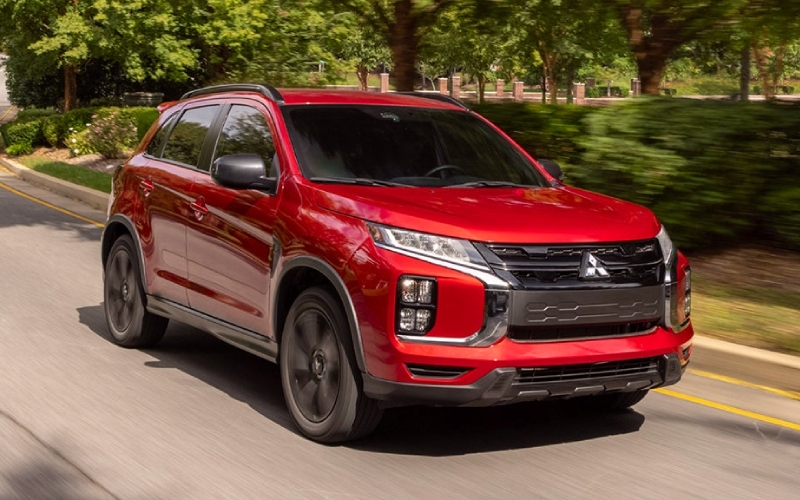
Atlantic City Mitsubishi - Which small SUV fits light snow and shore drives around Toms River, NJ better — the 2026 Mitsubishi Outlander Sport or the 2026 Chevrolet Trax?
It’s the question a lot of South Jersey drivers ask when cross-shopping small SUVs: if you split time between neighborhood streets, quick highway hops, and occasional shore runs, does standard all-wheel drive make a real difference? Put the 2026 Mitsubishi Outlander Sport next to the 2026 Chevrolet Trax, and the answer gets clear fast—especially for light snow days, wet intersections, and uneven curbs common around Toms River, NJ. The Outlander Sport’s All-Wheel Control (AWC) is standard across trims, so you don’t have to step up or swap packages for confident traction. By contrast, the Trax is front-wheel drive only. For many drivers, that difference becomes noticeable the first time a storm slicks the paint stripes or a steep driveway cut tests grip.
Beyond the drivetrain, ground clearance and suspension design shape how confident a small SUV feels in the real world. The Outlander Sport rides with 8.5 inches of clearance—useful for angled parking lot entries, coastal puddles, and frost-heaved side streets—while the Trax sits lower. Mitsubishi’s multi-link rear suspension adds poise over broken pavement, complementing a MacPherson strut front setup for balanced turn-in and braking stability. The Trax is nimble, but its torsion-beam rear axle prioritizes packaging and cost over pure composure. The result is a familiar city-friendly feel, but not the planted character you’ll notice in the Mitsubishi when the surface or conditions are far from perfect.
Everyday traction and stability explained
All-wheel drive isn’t just for backroads or blizzards. Around Toms River, parking lot grit, sand dust from nearby beaches, and quick downpours can all make traction inconsistent at low speeds. With Mitsubishi’s AWC, torque can shift to the wheels that have the best chance to hook up, smoothing out starts and keeping the vehicle settled as the surface changes. Add the Outlander Sport’s Drive Mode Selector, and you can tailor responses for a calmer, more predictable feel when roads are wet or rutted.
The Trax does many things right in daily driving. Its compact footprint fits narrow streets, and the turbocharged 1.2L three-cylinder feels peppy off the line. If your routine never includes steep driveway cuts, sand-scattered intersections, or uneven shoulders where you sometimes need to nudge over, front-wheel drive may be enough. But if you want built-in assurance without thinking twice about traction, the Outlander Sport’s standard AWC is a key advantage.
Cabin tech and convenience where it counts
Connectivity is a strong suit on both models. The Outlander Sport brings an 8.0-inch Smartphone-Link Display Audio system with standard Apple CarPlay and Android Auto, plus HD Radio and SiriusXM with a trial subscription for reliable traffic and weather on your commute. Available heated front seats and rain-sensing wipers work quietly in the background to keep you more comfortable and focused on the drive.
The Trax counters with standard wireless Apple CarPlay and wireless Android Auto and an available 11-inch center touch-screen. It’s an attractive, modern setup, especially if you want to go cable-free. For many shoppers, though, what matters most isn’t one feature—it’s how the package supports daily life. On that front, the Outlander Sport’s visibility, intuitive controls, and useful details like rear heater floor ducts and multiple USB ports make quick work of errands and weekend plans.
Space and flexibility for errands and weekends
Both SUVs seat five and offer a fold-flat rear bench with a 60:40 split, making it easy to load a stroller, cooler, or a couple of beach chairs. The Trax offers a touch more maximum cargo volume on paper, while the Outlander Sport focuses on practical space with a nearly square opening, a reversible cargo mat, and available all-weather cargo tray that stands up to sand and salt residue. Families and outdoor-minded drivers alike will appreciate how simply the Mitsubishi cabin cleans up and resets for the week ahead.
Safety and driver assistance technology
Each model delivers meaningful driver assists. The Outlander Sport includes Forward Collision Mitigation with Pedestrian Detection, Lane Departure Warning, and Automatic High Beam standard, plus 7 airbags including a driver knee airbag and RISE body construction. The Trax’s Chevy Safety Assist includes Forward Collision Alert and Automatic Emergency Braking, Front Pedestrian Braking, Lane Keep Assist with Lane Departure Warning, a Following Distance Indicator, and IntelliBeam High Beam Assist. In practice, both vehicles help you avoid trouble—but the Mitsubishi’s standard AWC adds the traction piece that helps you steer clear of hazards in the first place.
Who should choose which?
If you mostly drive in dry, predictable conditions, the Trax’s styling and easygoing manners may check your boxes. If your routes involve salt-spray side streets, angled driveways, or frequent slick surfaces—common realities around Toms River and nearby shore towns—the Outlander Sport’s standard AWC and additional clearance feel tailor-made. Its multi-link rear suspension, strong visibility, and thoughtful features support confident, low-stress driving when plans change or the weather turns.
- Traction advantage: Outlander Sport’s standard All-Wheel Control supports confident starts and steady control on mixed surfaces that front-wheel drive can struggle with.
- Composure advantage: Multi-link rear suspension and extra ground clearance help the Mitsubishi stay settled over patched pavement, driveway cuts, and puddles.
- Confidence advantage: Standard active safety tech plus stable footing make daily driving feel more predictable and less tiring.
Have more questions as you compare trims and features? Our team at Atlantic City Mitsubishi is here to help you match specs to your everyday roads. We’re proudly serving Cherry Hill, Glassboro, and Toms River with product expertise that’s grounded in how these vehicles perform where you drive.
Frequently Asked Questions:
Is all-wheel drive necessary if I rarely see snow?
Even without frequent snow, all-wheel drive helps on wet paint stripes, sandy intersections, metal bridge joints, and angled driveways. The Outlander Sport’s standard AWC adds traction for these everyday moments, so you don’t have to think about it.
How does ground clearance actually help in daily driving?
Extra clearance reduces scraping on steeper driveway cuts, protects against curb rash, and keeps the underbody away from pooled water or debris. It’s a small detail that pays off every time the pavement isn’t perfectly flat.
Do both SUVs have the latest smartphone integration?
Yes. The Outlander Sport includes Apple CarPlay and Android Auto, while the Trax offers wireless Apple CarPlay and wireless Android Auto. Both make it simple to bring your apps and maps along.
Which one feels more stable on patched or uneven roads?
Thanks to its multi-link rear suspension and standard AWC, the Outlander Sport tends to feel more composed over patched surfaces and uneven shoulders, adding a layer of calm to everyday driving.
What about longer-term ownership confidence?
Mitsubishi backs the Outlander Sport with a 10-year/100,000-mile Powertrain Limited Warranty, which supports confident ownership well down the road.
Request more 2026 Mitsubishi Outlander Sport information
Categorías:
Mitsubishi Outlander Sport