

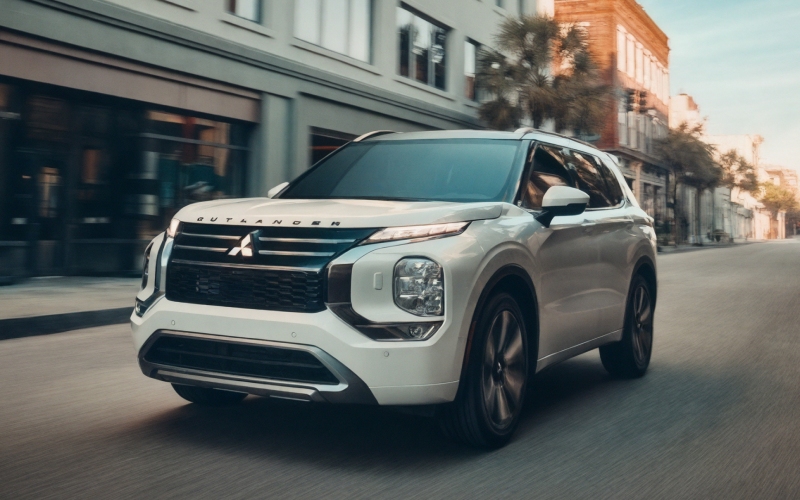
Atlantic City Mitsubishi - How does the 2026 Forester's third row stack up against the 2026 Mitsubishi Outlander for Toms River, NJ families?
When families around the Shore start comparing compact SUVs, one question pops up again and again: does either model offer a true third row? If you’re cross-shopping the 2026 Outlander and the 2026 Forester, the quick answer is that only the Outlander offers standard seven-passenger seating. The Forester is a spacious, well-packaged two-row SUV, but it’s designed strictly for five. That single difference can simplify a lot of day-to-day decisions — who rides with you to practice, whether the neighbors’ kids can join on a last-minute ice cream run, and how flexibly you can reconfigure seats for cargo versus people on weekends to Toms River or down the Garden State Parkway.
Beyond the seating chart, each SUV approaches capability and comfort with its own personality. The Outlander blends a 1.5L MIVEC DOHC turbocharged engine with a 48-volt Belt Starter Generator mild-hybrid system for smooth pull-away and supportive torque around town. On select trims, available MI-PILOT Assist™ with Navi-link can assist with adaptive cruise, lane centering, and mapped speed adjustments on highways — a thoughtful touch for long stints on Route 37 and the Parkway. Technology also gets a premium lift with standard wireless Apple CarPlay® and Android Auto™, plus available Dynamic Sound Yamaha® Premium or Ultimate audio that’s been tuned by Yamaha® Sound Meisters to preserve clarity, tone, and stage even as road and wind noise change.
Why the third row matters more than you think
It’s easy to underestimate how often a third row is a difference-maker. If your week includes both structured routines and spur-of-the-moment outings, having a 6th and 7th seat means fewer vehicles on the road, fewer complicated carpools, and fewer “sorry, we don’t have room” moments. Equally important, the Outlander’s third row folds flat when not in use, letting you pivot from people-hauling to cargo-hauling without rearranging your day. That’s a real perk when you’re juggling beach chairs, coolers, or a bulky stroller for a day by the water near Island Beach State Park.
The Forester is rightly loved for its open cabin and cargo volume with the second row folded, and if your needs never require a third row, it’s a very capable daily driver. But for families that occasionally run at six or seven passengers — even a few times a month — the Outlander makes those trips simpler and keeps everyone in one vehicle.
Seating comfort and access: practical details
With the Outlander, day-to-day usability extends to the second-row bench with a 40:20:40 split that makes loading long items easier while still keeping passengers belted in. Entry to the third row is aided by simple fold-and-slide movements, and you can keep the Outlander’s cabin organized with small-item storage and pockets that help prevent the usual family clutter. If you need more comfort up front, trims with synthetic suede or available semi-aniline leather balance durability and premium feel.
Forester’s rear seats provide plenty of legroom for taller teens and adults, and its expansive windows deliver visibility many drivers love. If you know you’ll never use a third row, that pairing — airy space and straightforward access — makes it a friendly cabin for everyday commuting and weekend errands.
On-road capability and driver confidence
Outlander’s available Super All-Wheel Control (S-AWC) gives you multiple drive modes, including Tarmac, Gravel, Snow, and Mud on select configurations, coordinating power and braking for consistent composure in changing conditions. For families who split time between suburban streets, shore towns, and occasional unpaved paths to trailheads, that’s an appealing layer of assurance. The Forester, for its part, brings standard Symmetrical All-Wheel Drive and available dual-function X-MODE® with Hill Descent Control, offering confident traction in low-grip situations. Both systems are capable; your choice comes down to which approach you prefer.
In driver assist tech, Outlander’s available MI-PILOT Assist™ with Navi-link aims to reduce workload on longer stretches, while Forester’s standard EyeSight® Driver Assist Technology includes features like Adaptive Cruise Control and Pre-Collision Braking. Each SUV offers a strong safety story; 360-degree camera technology is available on both lineups, though specific trim availability differs.
Audio and infotainment: a notable Outlander edge
If in-cabin sound quality matters, the Outlander’s available Dynamic Sound Yamaha® systems stand apart in this segment. The Ultimate system features a 12-speaker layout, dual amplifiers, and innovative noise-suppression measures. Intelligent functions like Speed Compensated Volume and Rain Compensated Volume help maintain fidelity when road speed or wipers change, preserving a clean soundstage. It’s the kind of upgrade that makes busy weeks feel a little calmer. Forester counters with an available Harman Kardon system, which is very good, but the Outlander’s Yamaha® collaboration is a unique advantage for music lovers.
Quick recap for Toms River-area families
When the conversation centers on seven seats, the Outlander is the straightforward choice. If you rarely carry more than five, Forester’s cabin shine-through, all-weather traction, and all-around usability remain compelling. Either way, matching your trim to the features you’ll use most is the key — think hands-free liftgates, camera systems, driver assists, and seating materials that fit your routine.
- Seating flexibility: Outlander offers standard third-row seating; Forester is a two-row SUV only.
- Everyday tech: Outlander brings standard wireless smartphone integration and available MI-PILOT Assist™ with Navi-link; Forester delivers standard EyeSight® and an available 11.6-inch touchscreen.
- Confidence in motion: Outlander’s available S-AWC drive modes vs. Forester’s Symmetrical AWD with available dual-function X-MODE® — both are capable, with different strengths.
For families who want one vehicle to handle team carpools, weekend beach runs, and school-day shuttles without a second thought, the Outlander’s third row is the clear differentiator. It also helps that the Outlander layers in refined audio options and a clean, modern interface that make drives to practice or up the Parkway more relaxing.
Frequently Asked Questions:
Does the 2026 Forester offer a third row like the Outlander?
No. The Forester is a two-row, five-passenger SUV. The Outlander provides standard seven-passenger seating with a fold-flat third row.
How do the AWD systems compare for daily driving?
Outlander offers available Super All-Wheel Control with multiple drive modes to coordinate traction and stability, while Forester features standard Symmetrical All-Wheel Drive with available dual-function X-MODE® and Hill Descent Control. Both provide confident all-weather grip.
Are both models equipped with modern infotainment and driver assists?
Yes, though the details differ by trim. Outlander includes standard wireless Apple CarPlay® and Android Auto™, with available MI-PILOT Assist™ with Navi-link. Forester features standard EyeSight® Driver Assist Technology and offers an available 11.6-inch touchscreen with wireless smartphone integration.
Where can I compare trims and schedule a drive?
Visit Atlantic City Mitsubishi — serving Cherry Hill, Glassboro, and Toms River — to compare seating layouts, technology, and driver assists across trims and find the configuration that fits your routine.
Request more 2026 Mitsubishi Outlander information
Categories:
Mitsubishi Outlander