

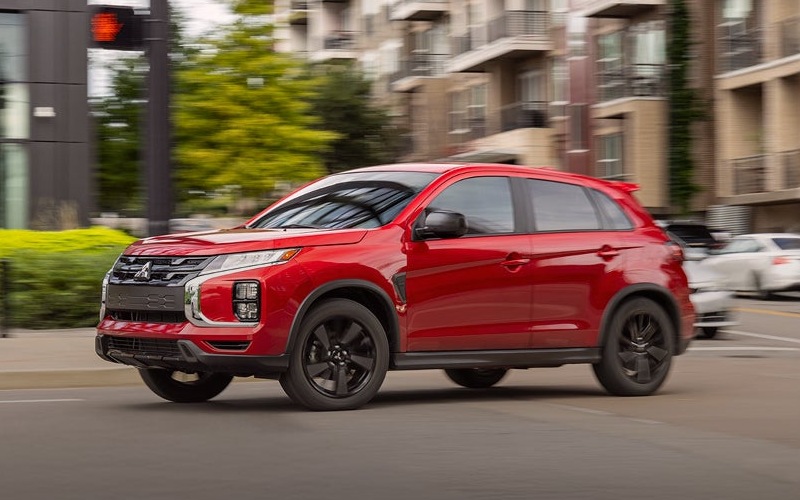
Atlantic City Mitsubishi - Which SUV offers better winter traction for Philadelphia, PA commuters — the 2025 Mitsubishi Outlander Sport or the 2025 Honda HR-V?
When winter commutes add slick bridges and surprise flurries, traction and visibility become more than talking points. The 2025 Mitsubishi Outlander Sport starts strong with All-Wheel Control (AWC) standard on every trim, supported by a Drive Mode Selector and rain-sensing wipers for automatic clarity the moment precipitation hits. The 2025 Honda HR-V supplies available Real Time AWD™, which works well when optioned, but many shoppers end up in front-wheel-drive configurations. For those who want the advantages of all-wheel traction without having to shop it into the vehicle, the Mitsubishi approach pays off right away.
Confidence in winter also relies on lighting and driver assistance. Outlander Sport equips LED low and high beam headlights across the lineup and features Automatic High Beam as standard. Forward Collision Mitigation with Pedestrian Detection is included on every trim, and SE/SEL add Blind Spot Warning with Lane Change Assist and Rear Cross Traffic Alert. HR-V delivers a robust Honda Sensing® suite and, on upper trims, a blind spot information system. Where the difference shows up is consistency: Outlander Sport builds capability into each trim, while HR-V requires careful selections to reach parity. For drivers who split time between narrow city lanes and open freeways, this baseline matters.
- AWD availability vs standard: Outlander Sport includes AWC on every trim, while HR-V makes AWD optional.
- Visibility in mixed conditions: Outlander Sport offers rain-sensing wipers and LED low and high beams across the lineup for consistent clarity.
- Safety layering: Both SUVs include core collision-mitigation features; Outlander Sport adds available BSW with LCA and RCTA on SE/SEL.
- Everyday usability: Power folding side mirrors on Outlander Sport SE/SEL help in tight city parking and winter garage maneuvers.
When it comes to traction, both systems are smart, but standard AWC means you do not have to chase a trim or package to get winter-readiness. That predictability extends to daily routines: leaving before sunrise, navigating wet leaves, or merging onto salted highways after a storm. The Outlander Sport’s suspension tuning works with AWC to keep the vehicle composed when lanes are rutted or surfaces change under light throttle. HR-V’s available AWD is effective, yet having to opt into it adds complexity to the purchase decision for winter-focused drivers.
Below is a quick decision path our shoppers often follow if winter confidence is a top priority.
- Do you want AWD without shopping into it?: Choose Outlander Sport for standard AWC; with HR-V, verify AWD availability on your preferred trim.
- Are automatic visibility helpers important?: Outlander Sport includes rain-sensing wipers and LED low and high beams across the lineup.
- Will you park on-street or in tight garages often?: Outlander Sport SE/SEL offer power folding side mirrors to reduce scuffs and dings.
- Do you value unified safety features from the base trim?: Outlander Sport includes FCM with Pedestrian Detection and AHB on every model.
Shoppers frequently ask if warranty should influence a winter-driving choice. Warranty does not change surface grip, but it does shape peace of mind. Mitsubishi backs the Outlander Sport with strong powertrain coverage as part of Mitsubishi Motors Confidence, a reassuring layer when planning long-term ownership through seasons of weather and mileage. That foundation complements the year-round utility delivered by AWC and the vehicle’s robust safety list.
At Atlantic City Mitsubishi, our product specialists can demonstrate how AWC behaves on wet, cold surfaces and how Automatic High Beam and LED lighting help on unlit stretches beyond the city. For those commuting from the suburbs to downtown, we set up back-to-back routes that highlight traction on uneven surfaces, fine control at low speed, and the benefit of power folding side mirrors in tight parallel spots. Whether you are carrying sports gear after a late practice or heading out before dawn, the Outlander Sport’s standard-ready approach is easy to appreciate.
We are proud to be serving Glassboro, NJ, Toms River, NJ, and Philadelphia, PA, with hands-on comparisons tailored to winter driving questions. If your top query is which SUV feels more confident the moment temperatures drop, the Outlander Sport’s standard AWC, automatic visibility features, and safety layering make a persuasive case for predictable, low-stress commuting all season long.
Frequently Asked Questions:
Does the Outlander Sport’s standard AWC help on slushy side streets?
Yes. AWC actively manages power to help reduce slip on patchy, slushy surfaces, aiding confident launches and steady progress.
Will rain-sensing wipers make a difference in mixed winter precipitation?
They do. The system engages automatically as conditions change, helping maintain forward visibility without constant manual adjustment.
How do the safety systems compare when roads are slick?
Both SUVs provide collision-mitigation features. Outlander Sport adds available Blind Spot Warning with Lane Change Assist and Rear Cross Traffic Alert on SE/SEL, which is valuable during lane changes and backing maneuvers in low-friction conditions.
Is there a learning curve to using Outlander Sport’s AWC or drive modes?
It is straightforward. Set your preferred drive mode and go; the system quietly supports traction without demanding frequent driver inputs.
Where can I try these systems locally?
Schedule a road loop that mixes city streets and open stretches with our team. We can replicate your daily route to showcase how the systems work in real-world conditions.
Request more 2025 Mitsubishi Outlander Sport information
Categories:
Mitsubishi Outlander Sport