

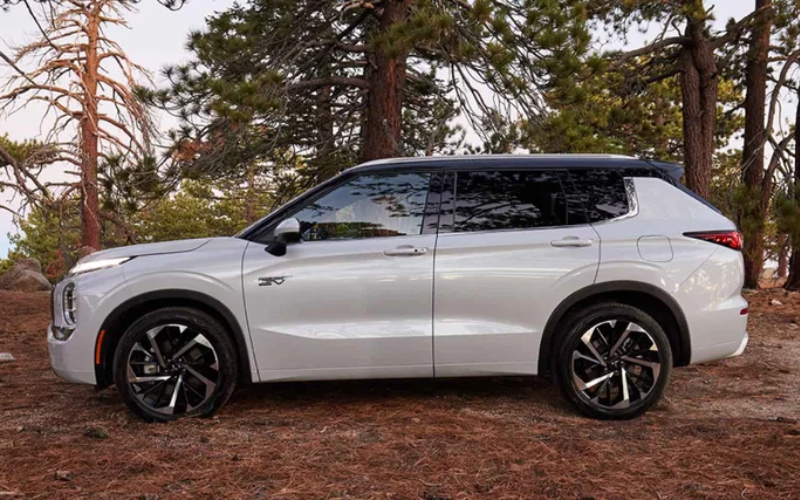
Atlantic City Mitsubishi - Does the 2025 Mitsubishi Outlander Plug-In Hybrid charge faster than the 2025 Ford Escape Plug-in Hybrid around Cherry Hill, NJ?
Charging speed is one of the most practical differences shoppers notice when comparing these two plug-in hybrid SUVs. The Outlander Plug-In Hybrid supports DC fast charging to approximately 80% in about 38 minutes and features a 6.6 kW onboard AC charger for faster Level 2 charging at home. The Escape Plug-in Hybrid, by contrast, uses a 3.3 kW onboard charger and does not support DC fast charging, which can lengthen public charging sessions and reduce flexibility on longer days. This single distinction can change your weekly routine—especially if you rely on public stations or want quick top-ups between errands, practices, and commuting.
The Outlander PHEV also pairs its charging advantages with capability that shines in all seasons. Standard Super All-Wheel Control (S-AWC) and Twin Motor 4WD deliver confident traction in rain or light snow, while seven drive modes let you adapt to surfaces from Tarmac to Gravel and Snow. The cabin’s three-row versatility, tri-zone climate control, and available MI-PILOT Assist™ with Navi-link give you space, comfort, and driver support for family travel, while the Escape PHEV’s two-row layout and front-wheel-drive system target a narrower set of needs.
- DC fast charging capability: Outlander Plug-In Hybrid can add charge quickly at compatible stations; Escape Plug-in Hybrid cannot DC fast charge.
- Onboard AC charger: Outlander’s 6.6 kW hardware shortens Level 2 sessions at home compared to the Escape’s 3.3 kW unit.
- All-weather confidence: Outlander’s standard S-AWC increases traction across seasons; Escape PHEV is front-wheel drive only.
- Cabin flexibility: Outlander seats up to seven with a folding third row; Escape offers two rows for five.
- Driver assistance: Available MI-PILOT Assist™ with Navi-link supports smoother highway transitions in the Outlander.
Owners who charge mostly at home will still appreciate how the Outlander’s 6.6 kW onboard charger compresses the time window for overnight or mid-day top-ups. For those who depend on public charging, DC fast charging is the difference between planning your day around the vehicle and letting the vehicle fit around your day. That’s especially helpful for families balancing school drop-offs, activities, and weekend trips across the region.
At Atlantic City Mitsubishi, we help you plan a charging strategy that fits your lifestyle—home installation tips, how to find DC fast chargers along your route, and ways to use EV mode for the drives where it matters most. Our team is proud to be serving Cherry Hill, Glassboro, and Toms River with guidance that goes beyond the spec sheet, from setting up charging timers to demonstrating how MI-PILOT Assist™ behaves in real traffic.
Frequently Asked Questions:
Will DC fast charging harm the battery if used often?
DC fast charging is safe to use within the vehicle’s guidelines. As with any lithium-ion battery, frequent high-rate charging can add incremental wear over many years, but the Outlander Plug-In Hybrid manages battery temperature and charging profiles to protect longevity.
Can I rely on public charging if I don’t have a garage?
Yes. With the Outlander Plug-In Hybrid’s DC fast charging and 6.6 kW AC support, many owners confidently use public stations. We recommend mapping chargers on your common routes and leveraging charging while you shop, dine, or work.
How should I schedule home charging?
Use the vehicle’s charging timer to align with off-peak utility hours where available. This helps manage household load and ensures you start each morning with a full charge.
Request more 2025 Mitsubishi Outlander Plug-In Hybrid information
Categories:
Mitsubishi Outlander Plug-In Hybrid